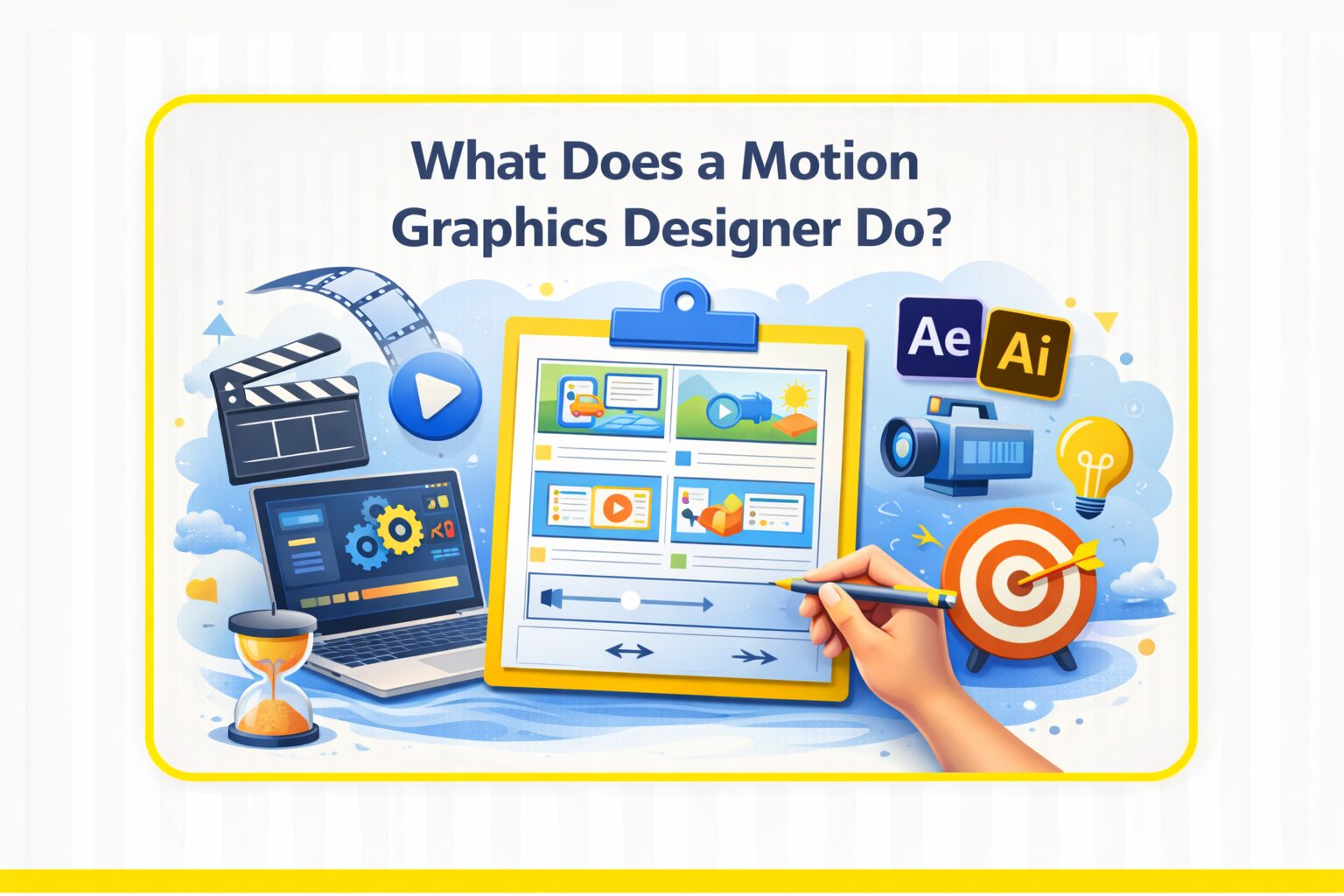
What Is a Motion Graphics Designer?
A motion graphics designer is a creative professional who combines graphic design with animation to produce moving visual content. Instead of creating static visuals only, they bring text, shapes, icons, illustrations, and other design elements to life through motion.
This role has become increasingly important as brands rely more on video, digital campaigns, social media content, and visual storytelling. The current Smart Media page already frames the topic around this exact question, and it sits within the site’s broader motion graphics section.
What does a motion graphics designer do?
A motion graphics designer creates animated visuals that communicate ideas clearly and attractively. Their work often appears in explainer videos, advertisements, promotional clips, social media videos, intros, title sequences, presentations, and branded content.
The goal is not just to make things move, but to make information easier to understand and more engaging to watch. Good motion design combines timing, composition, rhythm, typography, and visual clarity to support a message.
What kind of content do they create?
Motion graphics designers may work on many types of projects, including:
- animated logos
- social media videos
- explainer videos
- advertising visuals
- title animations
- product presentations
- UI animations
- infographic videos
In all of these, the designer uses movement to guide attention, strengthen the message, and improve the viewer’s experience.
What skills does a motion graphics designer need?
A strong motion graphics designer usually needs a mix of design and animation skills. That includes understanding layout, color, typography, visual hierarchy, timing, and storytelling.
They also often need to know how to:
- build scenes and compositions
- animate text and graphic elements
- work with transitions and pacing
- prepare assets for video output
- match visuals to a brand style
This means the job is not only technical. It also requires creative judgment and a strong sense of communication.
What software do motion graphics designers use?
Motion graphics designers often work with tools such as Adobe After Effects, Adobe Illustrator, and Adobe Photoshop. Illustrator and Photoshop help create the visual assets, while After Effects is commonly used to animate and assemble them.
Depending on the project, they may also work with video editing, sound, or 3D tools, but the exact workflow depends on the type of content being produced.
How is a motion graphics designer different from a graphic designer?
A graphic designer usually focuses on static visuals such as logos, posters, brand assets, and social media posts. A motion graphics designer works with many of the same visual principles, but adds movement, timing, and animated transitions.
In simple terms:
- graphic design focuses on still visuals
- motion graphics design focuses on animated visuals
The two roles overlap, but motion design requires an extra layer of thinking related to time, sequencing, and visual flow.
Is a motion graphics designer the same as a video editor?
Not exactly. A video editor mainly works with recorded footage, cutting and arranging clips to build a final video. A motion graphics designer focuses more on creating animated design elements from scratch.
In some jobs, one person may do both, but they are still different roles. Motion graphics is more design-based, while editing is more footage-based.
Why is this role important?
Motion graphics designers are important because digital audiences respond strongly to visual movement. Animation can simplify information, make content more memorable, and help brands present themselves in a more dynamic way.
As more companies invest in video marketing and short-form content, motion graphics has become a valuable part of communication, branding, and advertising.
Final thoughts
A motion graphics designer is someone who turns visual ideas into animated communication. They combine design principles with motion to create content that is clearer, more engaging, and better suited to digital platforms.
As visual communication continues to move toward video and dynamic content, this role remains highly relevant for brands, agencies, and creators who want to explain, promote, and connect more effectively.