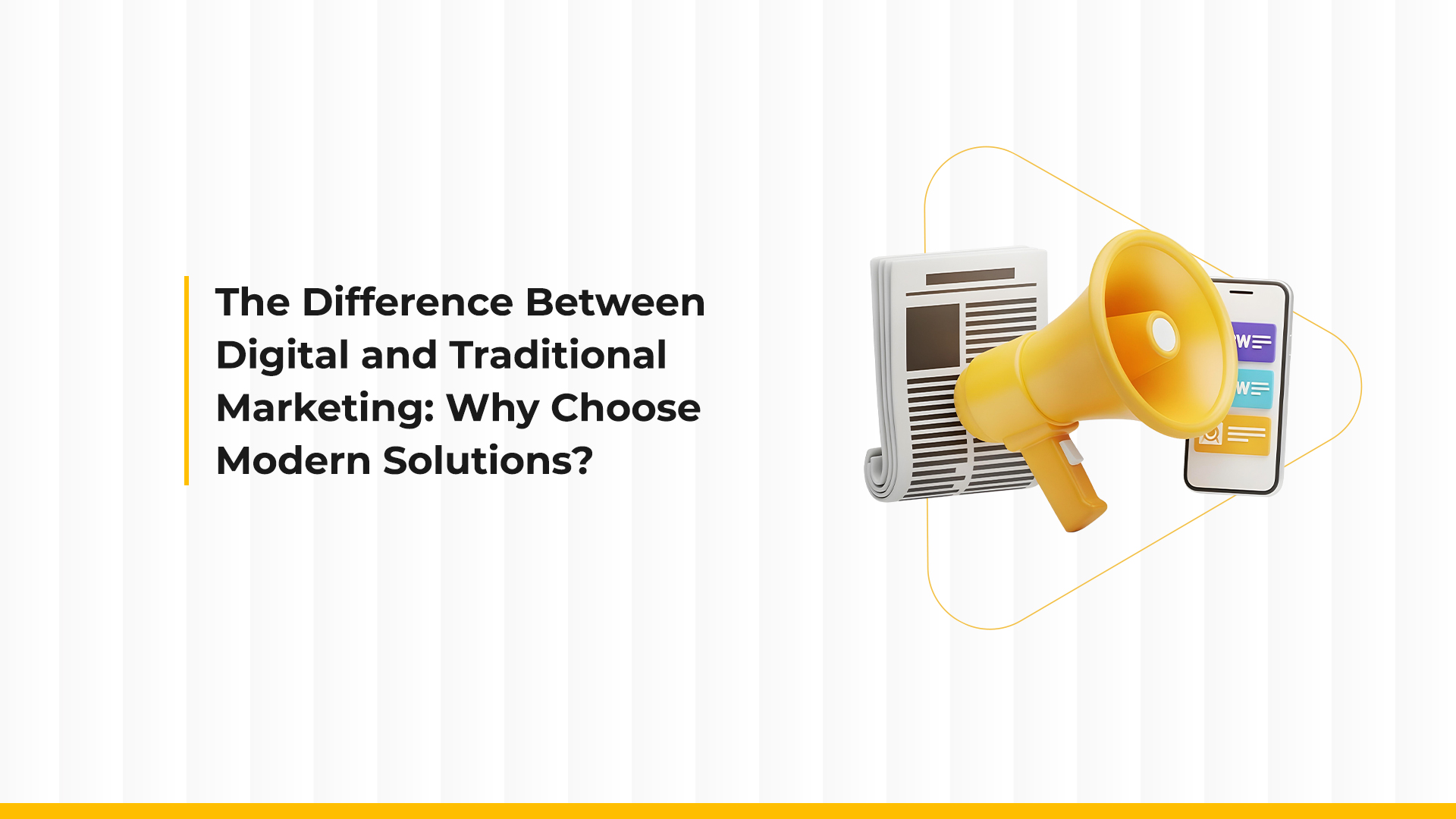
In a world where technology evolves rapidly and consumer behavior changes at an unprecedented pace, businesses today face two main options when planning their marketing strategies: rely on traditional methods or adopt modern digital approaches. This raises an essential question: which one is better?
Let’s explore the difference between digital vs. traditional marketing, understand why many businesses now prefer digital solutions, and highlight the key benefits of online marketing that have become the talk of business owners everywhere.
1. What Is Traditional Marketing?
Before diving into the comparison between digital vs. traditional marketing, it’s important to understand what each approach means.
Traditional marketing refers to the methods that rely on non-digital media, such as:
- Newspaper and magazine ads
- TV and radio commercials
- Outdoor billboards
- Printed brochures and flyers
Although these methods were effective in their time, they lack precise measurement and real interaction. When comparing digital vs. traditional marketing, traditional marketing is usually one-directional, offering no direct communication channel with the audience.
2. What Is Digital Marketing?
Digital marketing includes all promotional activities performed online. This covers:
- Search engine marketing
- Social media advertising
- Email marketing
- Video content
- Display ads, and more
When analyzing digital vs. traditional marketing, the most notable advantage of digital marketing is its ability to personalize messages and accurately reach the target audience.
3. Cost Differences
One of the biggest differences in digital vs. traditional marketing is cost.
Traditional marketing requires large budgets for TV ads, radio spots, or printing materials.
Digital marketing, however, offers flexible options suitable for all budget sizes.
One major benefit of online marketing is that a startup can launch an effective campaign with a small budget through platforms like Facebook or Google. This is a key reason why many businesses now prefer digital marketing when comparing digital vs. traditional approaches.
4. Reach and Targeting Precision
When considering digital vs. traditional marketing, one major difference is targeting accuracy.
Traditional ads reach anyone watching TV or reading a newspaper—with no control over demographics.
Digital marketing, however, allows targeting based on:
- Age
- Location
- Interests
- Buying behavior
- Device type, and more
One of the biggest benefits of online marketing is the ability to reach the exact people most likely to convert—minimizing wasted ad spend.
5. Speed of Results and Analytics
Digital marketing provides real-time results.
You can track:
- Clicks
- Impressions
- Conversions
- Engagement metrics
In contrast, traditional marketing takes much longer to measure performance.
This speed is one of the strongest benefits of online marketing and a clear difference in the digital vs. traditional comparison.
6. Audience Interaction
In the age of social media, it’s not enough to simply show an ad—you must engage with your audience.
When comparing digital vs. traditional marketing, digital clearly wins in interaction:
- Comments
- Direct messages
- Reviews
- Live sessions
- Story reactions
This direct communication is one of the most powerful benefits of online marketing and helps brands build long-term customer relationships.
7. Flexibility and Easy Adjustments
If an ad isn’t performing well, digital marketing allows you to edit, pause, or replace it instantly.
In traditional marketing, changing an ad requires new recordings, reprints, or additional broadcasting costs.
This highlights another big difference in digital vs. traditional marketing and reinforces the flexibility that digital marketing offers.
8. Global Reach
Want to reach an international audience?
Traditional marketing would require a massive budget.
Digital marketing allows you to launch global campaigns from your office—thanks to platforms like Facebook, Instagram, and Google.
This global expansion is one of the strongest benefits of online marketing.
9. Return on Investment (ROI)
Every marketer wants measurable results.
Digital marketing allows businesses to track ROI with great accuracy—knowing exactly how much they earned for every dollar spent.
This clarity gives digital marketing a significant advantage over traditional marketing.
10. Rich Multimedia Content
Digital marketing supports a wide range of content formats:
- Text
- Images
- Videos
- Podcasts
- Infographics
- Interactive animations
Traditional marketing is limited to one format per medium.
This versatility enhances user experience and strengthens the message—another clear benefit of digital vs. traditional marketing.
11. Long-Term Brand Building
From a branding perspective, digital marketing offers a continuous environment for building audience connection.
Through:
- Consistent content
- Daily posts
- Short videos
- Educational blogs
you can strengthen your brand identity over time.
Online marketing also allows you to build a strong visual and verbal identity that can be reinforced across digital channels—something much harder to achieve with traditional methods.
12. Environmental Sustainability
With global efforts toward sustainability, businesses are shifting toward eco-friendly approaches.
Traditional marketing relies heavily on paper, printing, and high-energy broadcasting.
Digital marketing, on the other hand, reduces material waste significantly.
This makes digital marketing not only efficient but environmentally responsible—enhancing brand image among eco-conscious consumers.
Why Choose Modern Solutions?
With evolving technology and digital consumer behavior, businesses must reevaluate their tools and strategies.
When comparing digital vs. traditional marketing, it’s clear that digital marketing offers:
- Higher efficiency
- Greater flexibility
- Instant analysis
- Better targeting
- Direct customer communication
- Lower cost and higher ROI
The benefits of online marketing simply outperform traditional methods in nearly every aspect.
Whether you’re a startup or an established enterprise, adopting digital strategies is no longer optional—it’s a competitive necessity.
Final Thoughts
If you’re seeking higher effectiveness, lower cost, accurate analytics, and direct audience engagement—the choice is clear.
The digital vs. traditional marketing comparison isn’t just a debate anymore.
It reflects a major shift in how brands achieve success in the modern world.
And the benefits of online marketing make it the smarter, more advanced choice for any business aiming to grow and stay ahead.